DBJ Iceberg

Enterprise Architecture advice for SMEs navigating AI adoption. Grounded in TOGAF, free of hype.

In the Era of AI Slop

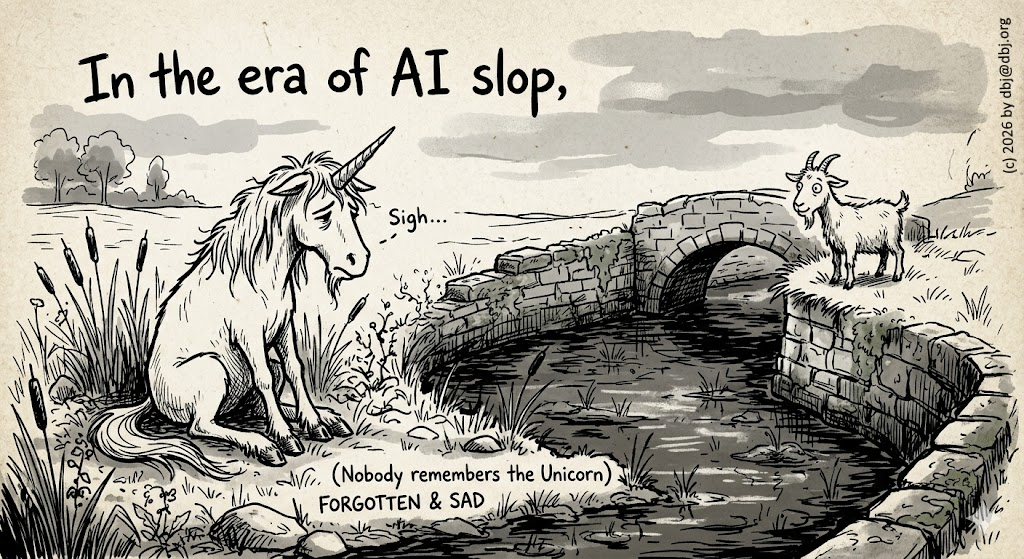
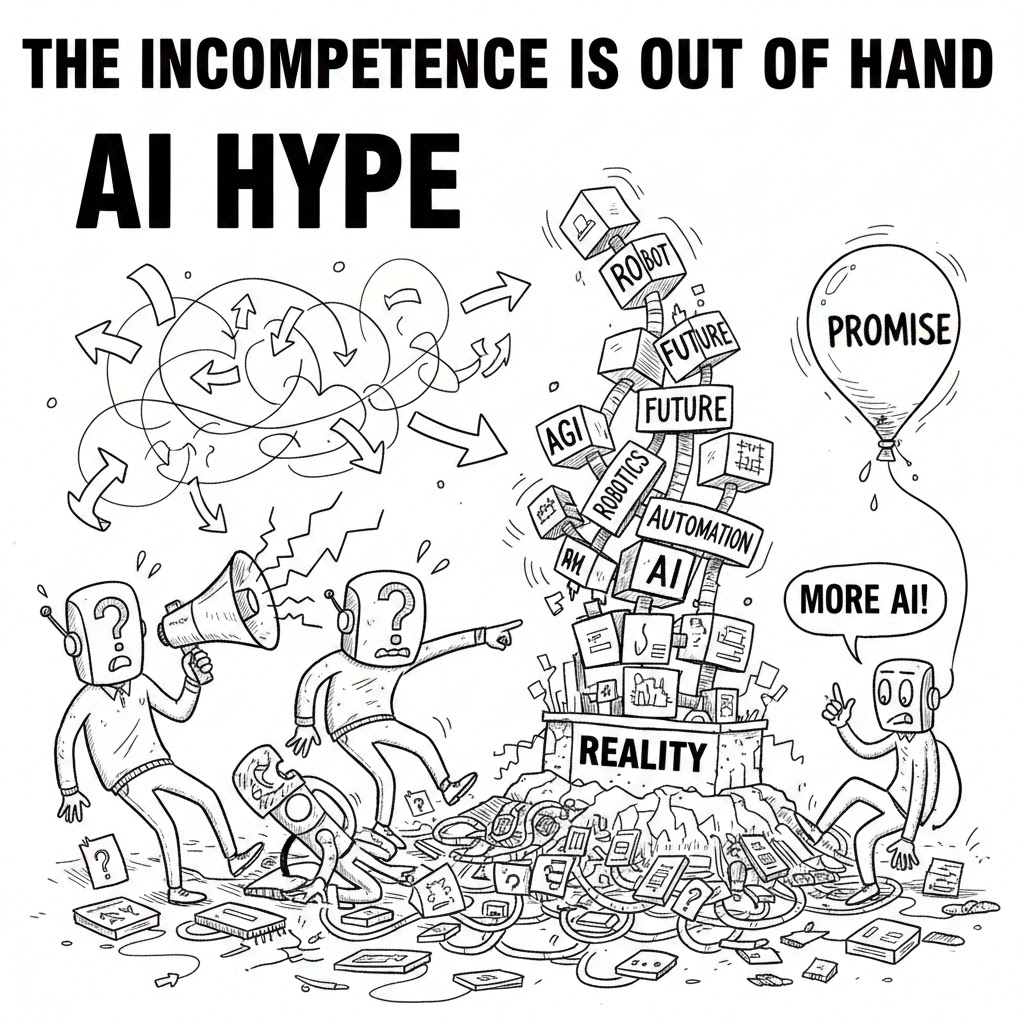
The unicorn is still there. Exactly where it always was. But. Nobody is looking. A goat walked to the side of the moat and it’s fine up there — visible, unremarkable, good enough. The goat didn’t defeat the unicorn. It is just vibed up in greater numbers, at lower cost, faster than anyone could count. That might be the epitome of the AI slop. Not malicious. Not even bad. Just sufficient — produced at a volume and velocity that makes discernment feel like an unaffordable luxury. (yes I used that word) ...

Fake It Until You Make It: Coding Monkeys vs. AI Architects

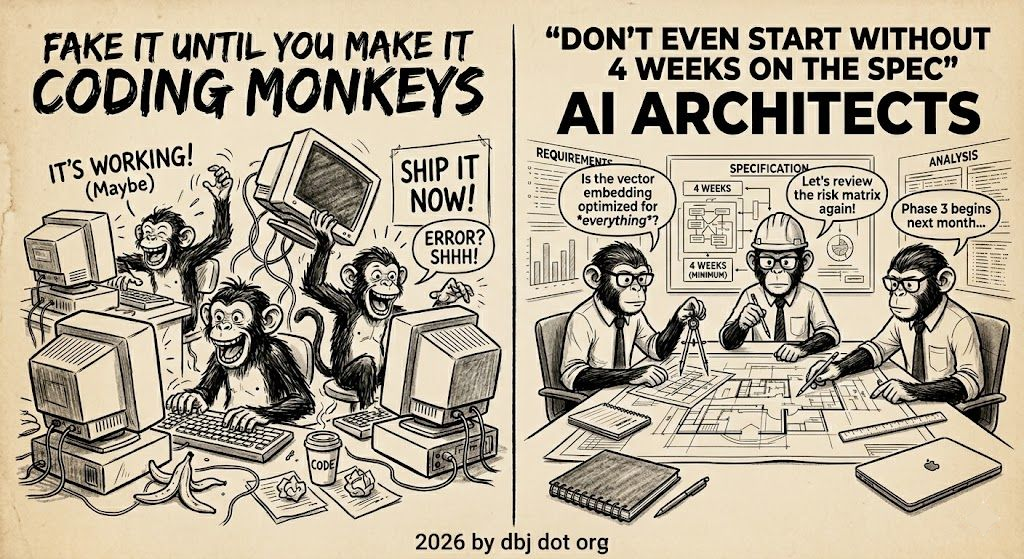
Two teams. Same deadline. Different disasters. On the left: the coding monkeys. Keyboards rattling, errors scrolling, “It’s working! Maybe—” before the SHIP IT NOW and the inevitable ERROR. Fast. Confident. Wrong. On the right: the AI architects. Whiteboards full, meetings scheduled, not a single line written yet. “Don’t even start without four weeks on the spec.” Safe. Thorough. Also wrong. The cartoon is funny because both rooms exist in every organization that has ever touched software. ...

What You Are Looking For Is Optimal Implementation

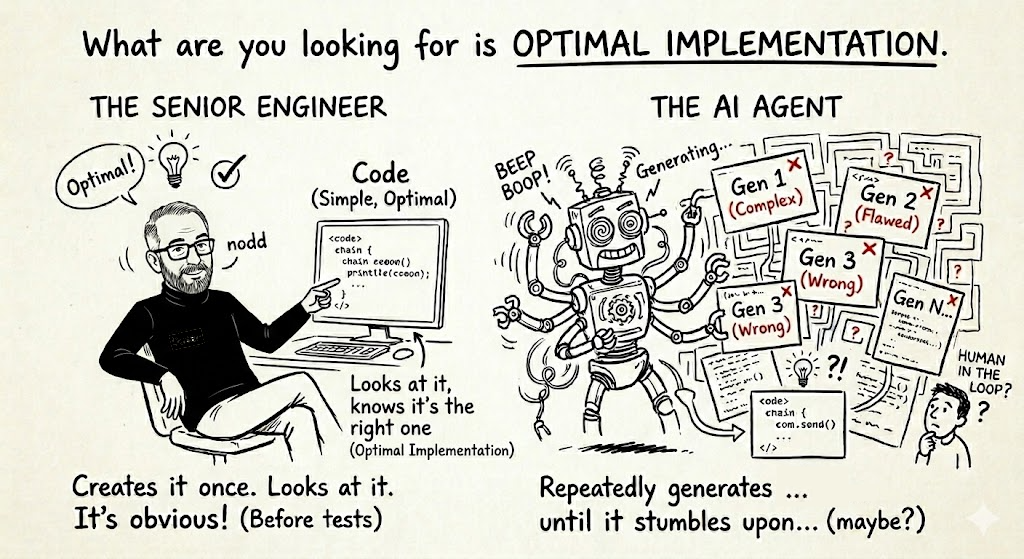
The senior engineer looks at the problem. Builds a mental model. Writes code that is simple and correct. Looks at it again, knows it’s right, moves on. The AI agent generates. Evaluates. Regenerates. Evaluates again. Tries a variation. Stumbles into something that passes the tests. Maybe. Same output, different paths. And the path matters — not for sentimental reasons, but for practical ones. What optimal actually means Optimal implementation is not the cleverest solution. It’s not the most elegant one. It’s the one that is correctly scoped to the problem, legible to the next person who touches it, and arrived at deliberately rather than by exhaustion of alternatives. ...

AI on an Old Operating Model

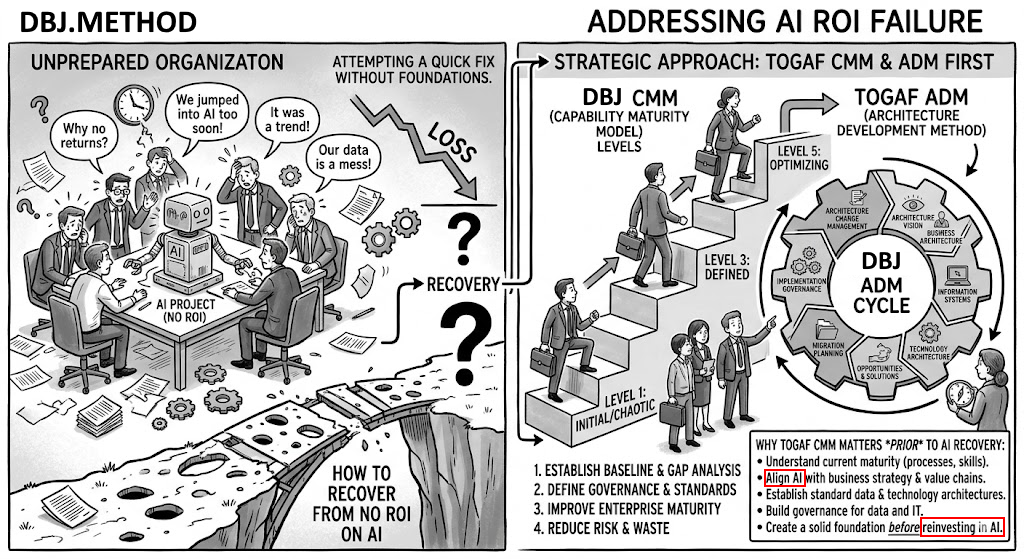
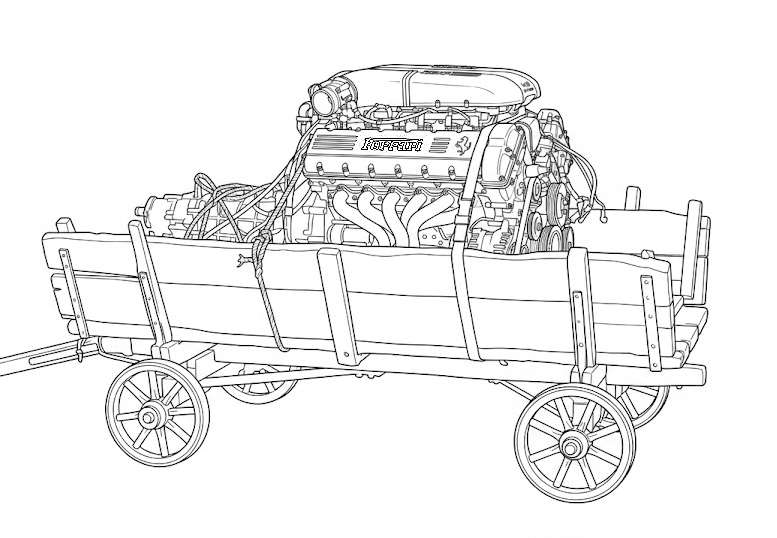
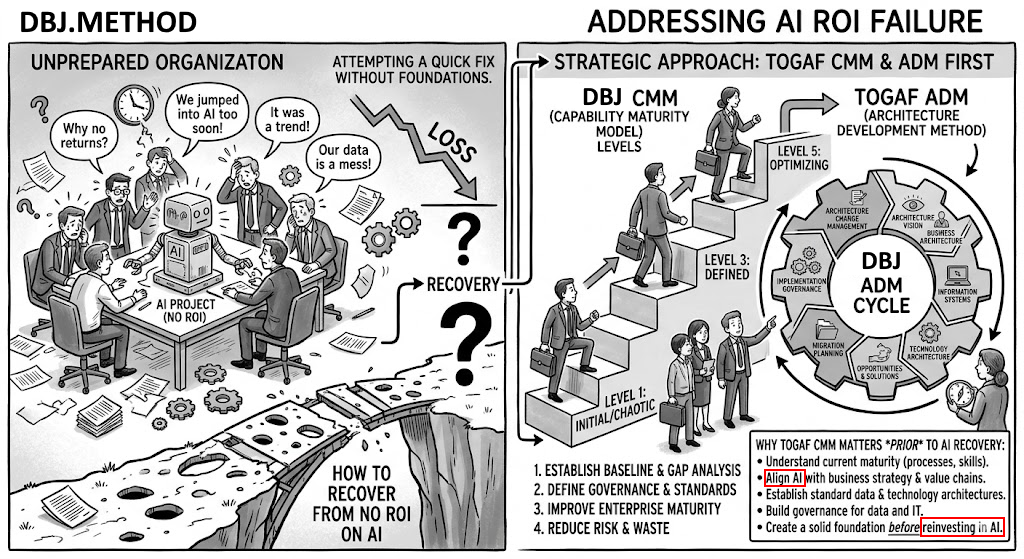
A Ferrari V12 engine dropped into a wooden farm cart. That is not satire. That is the exact situation most organizations are in right now. The engine is state-of-the-art. The cart is nineteenth century. The wheels are wooden. There is no drivetrain, no chassis rated for the load, and nowhere to sit. The moment you open the throttle, the cart disintegrates. What “AI Ready” Actually Means AI-readiness is not a technology procurement question. It is not about which model you license, which cloud you use, or how many GPU hours you can afford. Those are secondary. ...

Post-Hype Agents

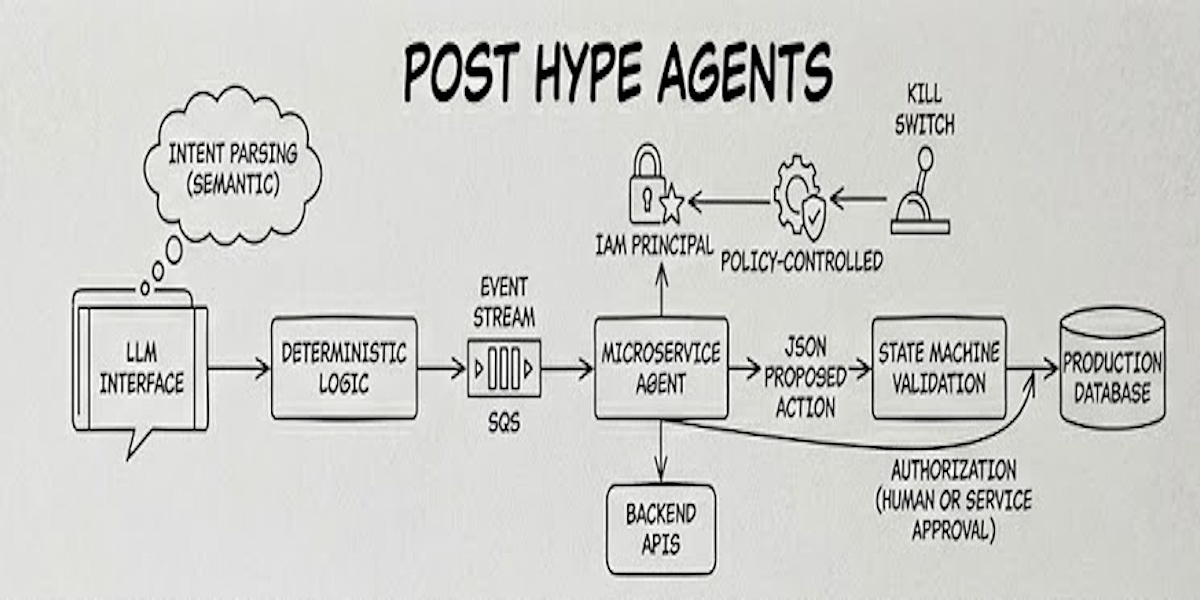
Post Hype Agents This document defines a pragmatic, engineering-first approach to “Agentic” architectures, aligning them with the rigorous standards of the DBJ Method as established at DBJ.ORG. To move beyond current industry hysteria, we define the “Agent” not as an autonomous entity, but as a Policy-Controlled, Deterministic-Adjacent Task Handler. 1. Core Architectural Principles The Agent is a Consumer: Agents are treated as standard microservices. They pull from event streams (e.g., SQS) and execute strictly defined calls to backend APIs. Semantic Adaptation: The LLM is strictly used as a semantic bridge—translating unstructured input (text, legacy formats) into structured data—not as a substitute for business logic. Determinism First: All logic remains in compiled, testable code. The LLM handles the “intent parsing,” while the DBJ Method dictates the “transactional execution.” 2. Governance and Safety (The “Kill Switch” Model) Following the principles of identity-centric security, an Agent is a first-class identity entity: ...

EA Is an Instrument

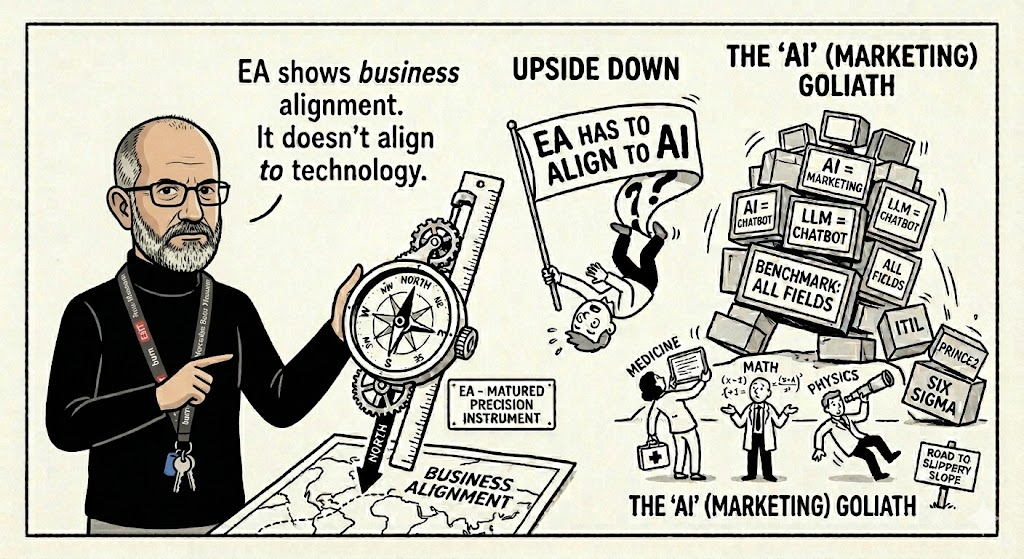
Regarding the phrase “EA has to align with AI” — a revolutionary flag being waved high. This time by Gartner: https://lnkd.in/d9F9_QZZ This is completely upside down. EA will not change because of AI; to suggest otherwise misses the point of EA entirely. For 50 years, EA has matured into a vital tool. EA is a precision instrument that tells you, me, and all of us whether a business is truly aligned with its technology. ...

Feature, Not a Bug

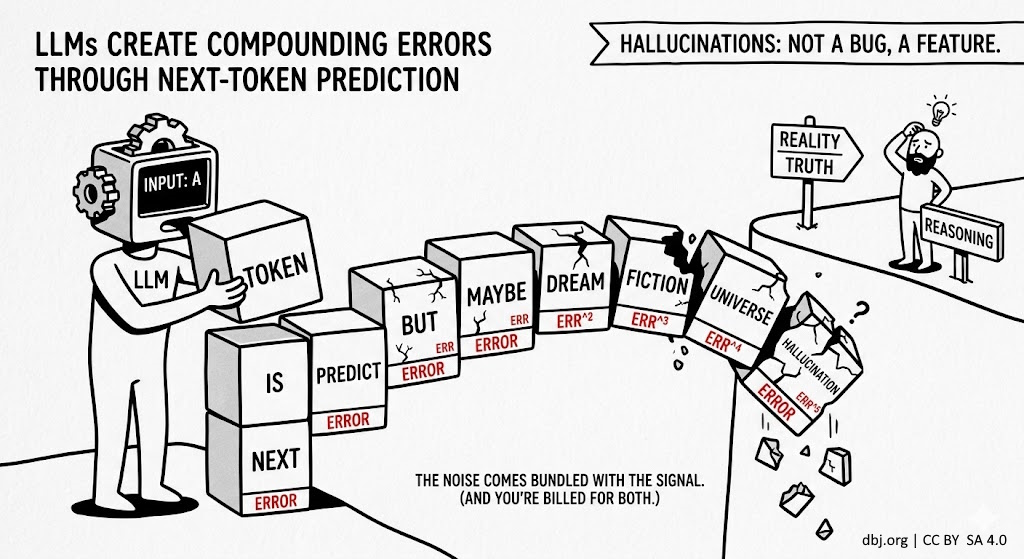
© Dusan B. Jovanovic — image generated with Gemini under author’s direction Nobody told you this when you readily signed up for the API key. Every LLM has the same training objective: predict the next token. Not the next true thing. Not the next logical step. The next token — one symbol, conditioned on all the symbols before it. That’s it. That’s the whole game. IMPORTANT It produces text that reads beautifully. It reasons the way a drunk navigates by streetlights — confident, directional, and increasingly wrong. Here is the mechanical problem. Each generated token feeds back into the context as input for the next prediction. So when the model makes a small error at step one, that error is now part of the premises at step two. The mistake doesn’t stay put. It becomes ground truth. The next token is predicted on top of a lie, and the one after that on top of a slightly larger lie, and so on down the chain until you’ve arrived somewhere that sounds perfectly coherent and has nothing to do with reality. ...

Enterprise AI, at Last

Aleph Alpha: The Right Model Aleph Alpha, founded in Heidelberg in 2019 by Jonas Andrulis, built Luminous — a full LLM. Not a wrapper, not a fine-tune of someone else’s weights. Their own architecture, their own training, their own inference. They sit in the same category as OpenAI and Anthropic: model creators, not mills. Their positioning was correct from the start: European sovereign AI. Data stays in Europe. No US cloud dependency. Strong traction with German public sector and defence. The differentiator is not raw benchmark performance — it is explainability and data sovereignty. ...

The Language Layer Does Not Matter

The Language Layer Does Not Matter Andrej Karpathy does not use C. He does not need to. His work sits at the model research and pedagogy layer where Python is the lingua franca. The real compute happens in C and CUDA underneath, but that layer is invisible to him. Training a model takes ten hours in C++ and ten hours in Python — the GPU is the bottleneck, not the host language. ...

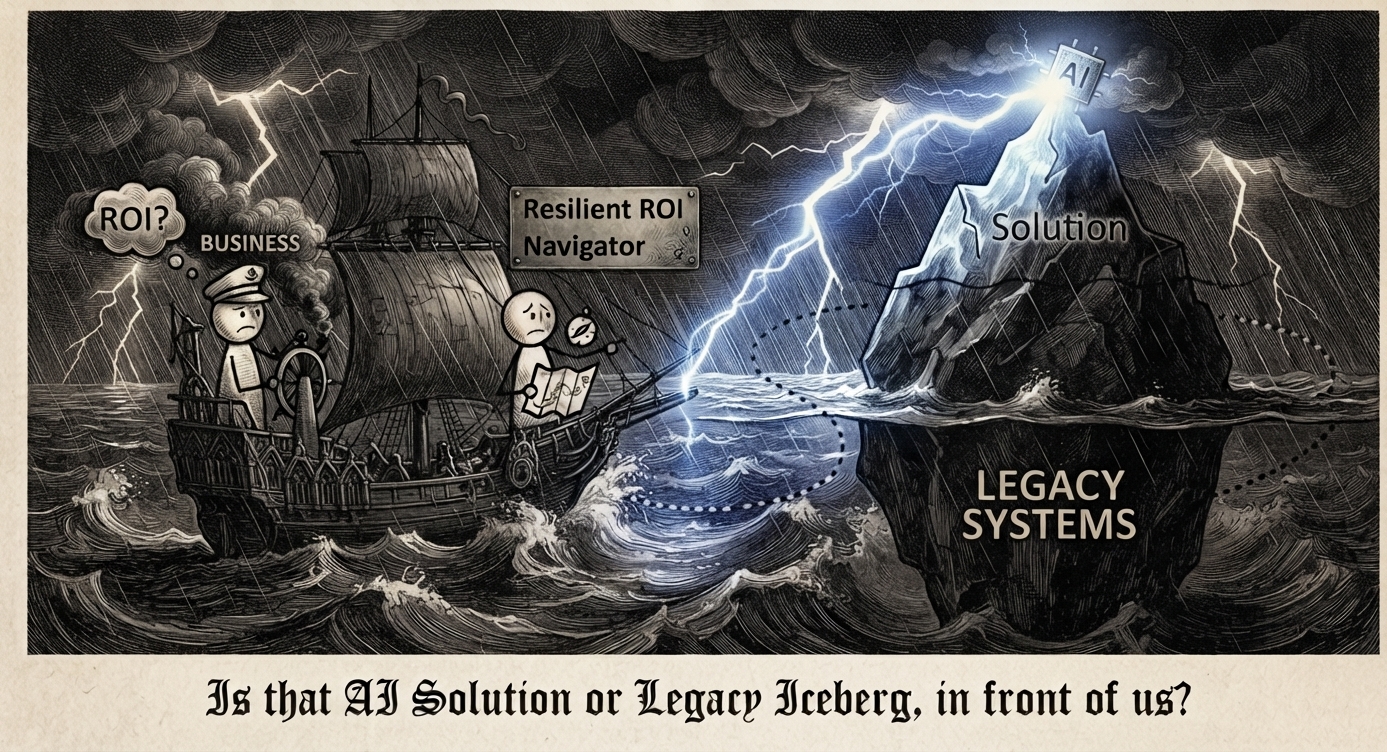
AI or Iceberg: EA as Navigator

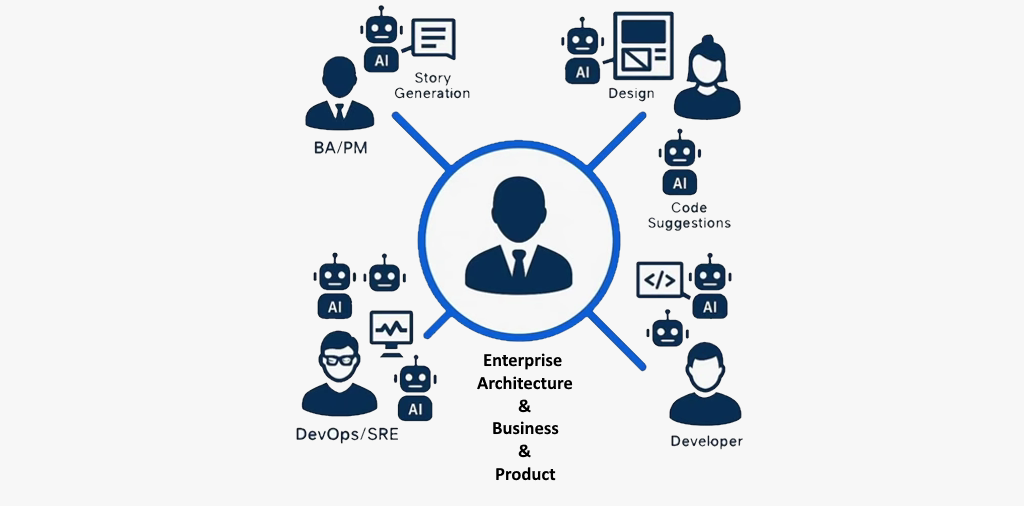
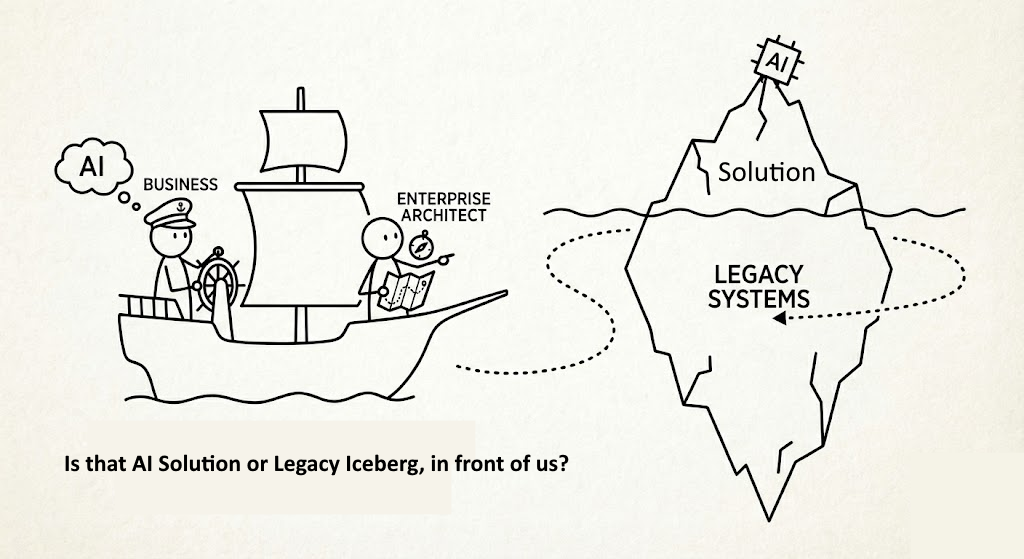
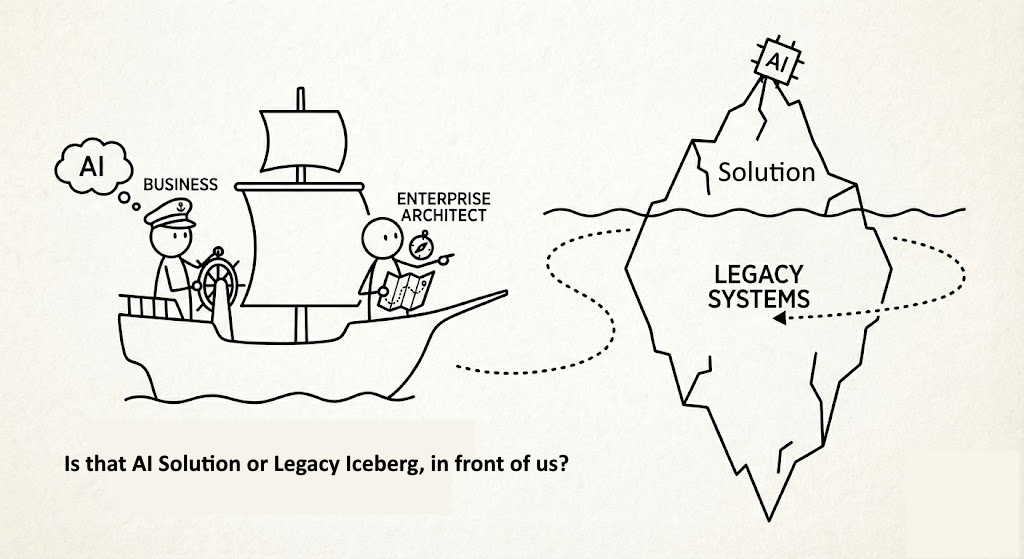
Clear roles == Clear communication == Safe Sailing In the words of Susanne Kaiser: “if the underlying system does not evolve…” — here are some risk examples: AI mirrors broken structures: in a big ball of mud with messy models and fuzzy boundaries, it propagates inconsistencies and hallucinates domain meaning AI amplifies organizational frictions: with repeated handoffs between teams, AI-accelerated code generation creates bigger queues at the handoff. It does not increase throughput, but inventory. AI builds the wrong things faster: without strategic guidance, it custom-builds commodities for non-differentiating problems that already have off-the-shelf alternatives. For details: Building Foundations for Continuous (AI-accelerated) Change ...