The Incompetence Is Out of Hand

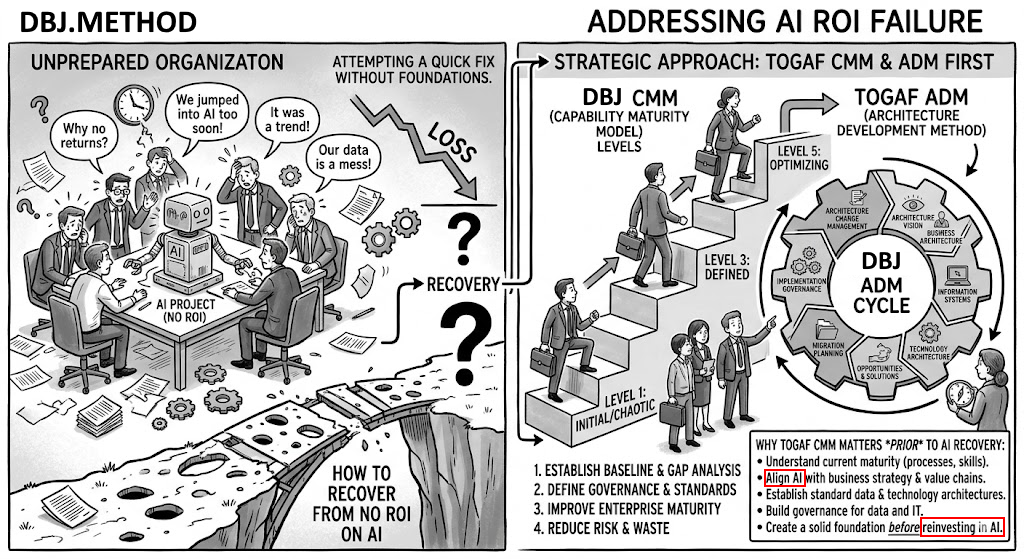
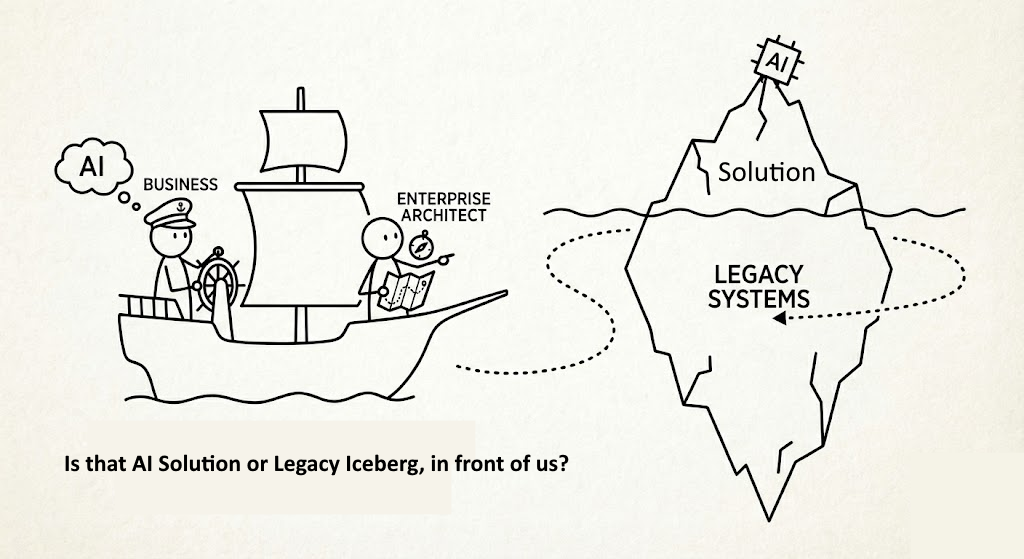
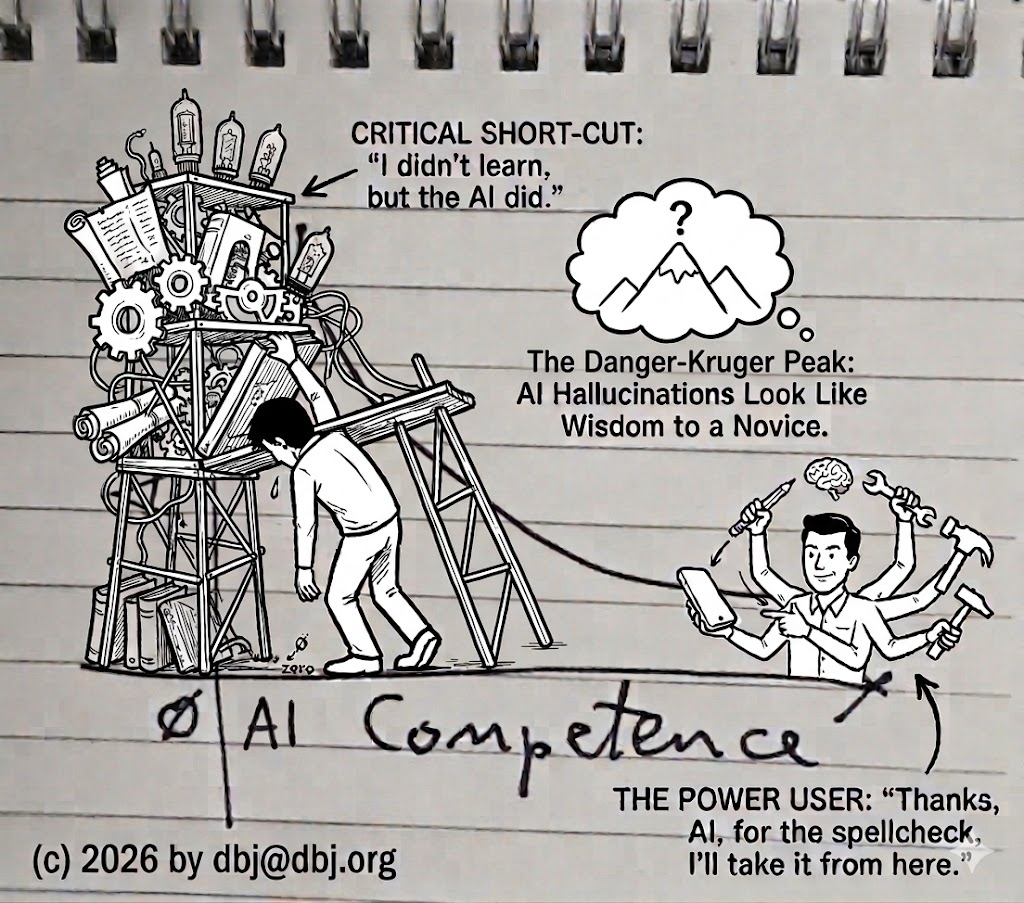
The AI hype cycle is running on fumes — and the fumes are labeled “Future,” “Promise,” and “More AI!” We’ve all seen it. A wobbly tower of buzzwords. Robots with megaphones. Executives cheering at a pile of rubble with “REALITY” written at the base. The cartoon writes itself because the pattern writes itself: Announce the AI initiative Stack acronyms until the tower looks impressive Call any collapse a “learning opportunity” Add more AI What’s actually out of hand isn’t AI. It’s the organizational incompetence that AI is being asked to hide. ...

Crufty AI

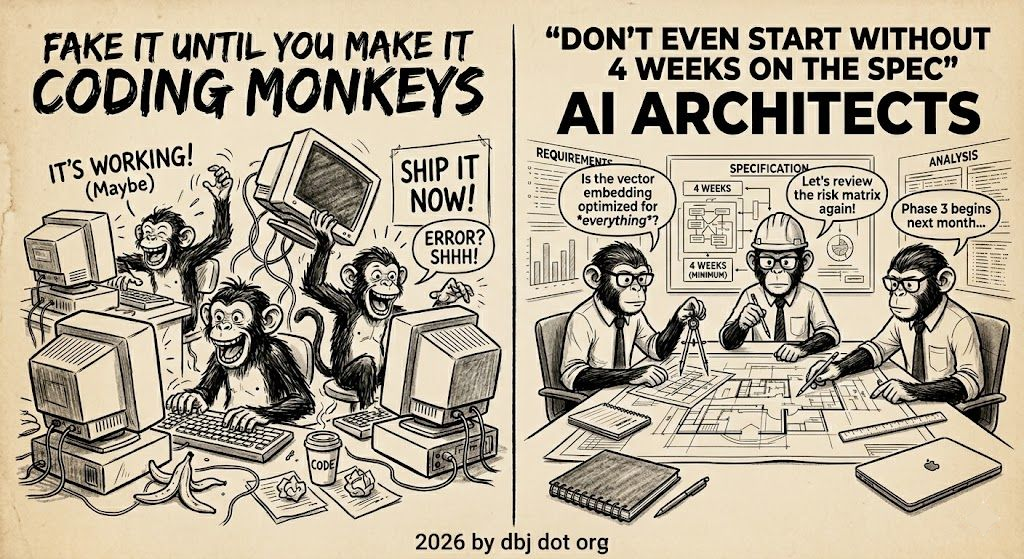
There’s a word MIT hackers coined in the 1950s: cruft — useless, tangled, accumulated junk that makes a system incomprehensible and impossible to build on. Sound familiar? In 2026, we have a new variant: crufty AI. Chatbots bolted onto data silos. LLMs fed dirty, unstructured, undocumented inputs. Automation layered on top of processes nobody fully understands anymore. Pilots that never graduate. Dashboards nobody uses. Vendors paid. ROI: zero. This isn’t an AI problem. It’s a cruft problem. ...

AI History: Postcard from 1979

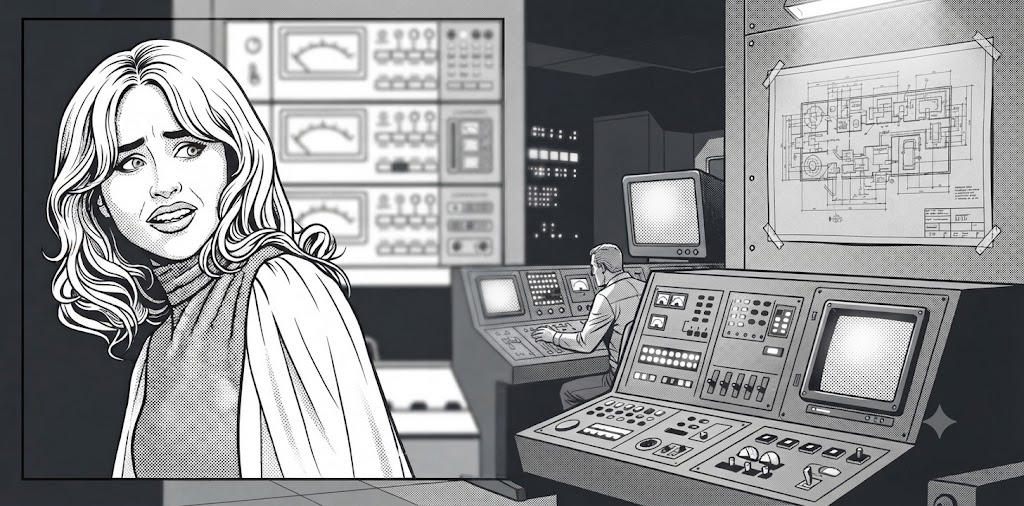
Is this post card from the past or is this a post card from the future? A fascinating and often overlooked chapter in AI history. Kunihiko Fukushima and his Neocognitron, a pioneering artificial “brain” was developed in 1979. That laid the foundation for today’s deep learning. The “Artificial Brain” (Neocognitron): Created by Kunihiko Fukushima in 1979, it was the world’s first multilayer convolutional neural network. This architecture is now the backbone of modern AI vision systems. The Biological Approach: Unlike most Western AI at the time, Fukushima’s goal was to simulate the brain to understand human vision. The 1970s Context: He conducted this research during the so-called “AI winter” at NHK’s Science & Technical Research Laboratories. The WABOT-1 Connection There was an actual robot rather than just a brain model. WABOT-1, the world’s first full-scale humanoid robot, built in 1973 at Waseda University. It had a limb-control system, vision system, and conversation system, and was estimated to have the mental faculty of a one-and-a-half-year-old child. ...

February 5, 2026 · 1 min · Dusan B. Jovanovic

A Tribute to C.A.R. Hoare

The Paper Everyone Forgot — Almost Tony Hoare published “Record Handling” in 1966. Before Simula 67. Before Smalltalk. Before anyone had coined the term object-oriented programming. He wasn’t thinking about objects sending messages to each other. He was thinking about something much simpler: data with a type tag, and code that switches on that tag. What He Actually Proposed You have a record. The record knows what it is — it carries a tag. You have a dispatch function that looks at the tag and calls the right handler. The handler takes storage and params. That’s it. ...