See also: Agentic Agile Manifesto, Agile BPT.
Here is the shocker. For agentic teams, Scrum is counterproductive. The scope of Scrum is humans software development teams. Agentic software development teams are not that.
The category error of applying Scrum to machines
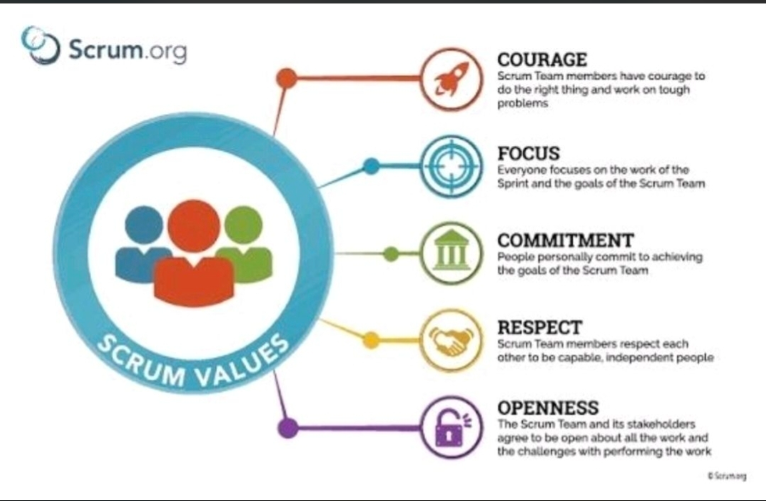
Attempting to apply Scrum to agentic software development is a fundamental category error. Scrum is anchored entirely in human sociology, team dynamics, and psychology. Core pillars like “Courage,” “Commitment,” and “Respect” explicitly assume sentient actors who choose to “do the right thing” or collaborate as “independent people.”
Why Scrum ceremonies fail with agentic teams
- Absence of sentient agency. Software agents are probabilistic data and token-prediction artifacts, not team members capable of personal conviction, moral courage, or emotional buy-in.
- Mismatch in execution velocity. Time-boxed sprints and human-centric synchronization rituals — daily stand-ups, backlog grooming, planning poker — artificially throttle machine-speed execution and continuous iteration loops.
- Incompatible metrics. Story points and velocity tracking are designed to measure human estimation heuristics, and are useless when applied to autonomous code-generation pipelines and programmatic agent loops.
Deterministic orchestration over agile rituals
Agentic systems require rigorous engineering governance rather than agile theater. Instead of relying on team consensus, sprint reviews, or retrospective venting, managing autonomous agents demands strict technical boundaries:
- Deterministic state machines. Explicitly defined execution graphs, transition criteria, and hard stops — not sprint goals.
- Pre-execution compliance. Automated validation layers that verify agent-generated outputs against structural constraints before any code touches a repository.
- Data-centric pipelines. Code changes and system states treated as versioned data artifacts governed by deterministic orchestrators, not human team dynamics.
Are you structuring your current agentic execution layers around explicit state-machine pipelines, or are you using event-driven message passing to coordinate multi-agent workflows?