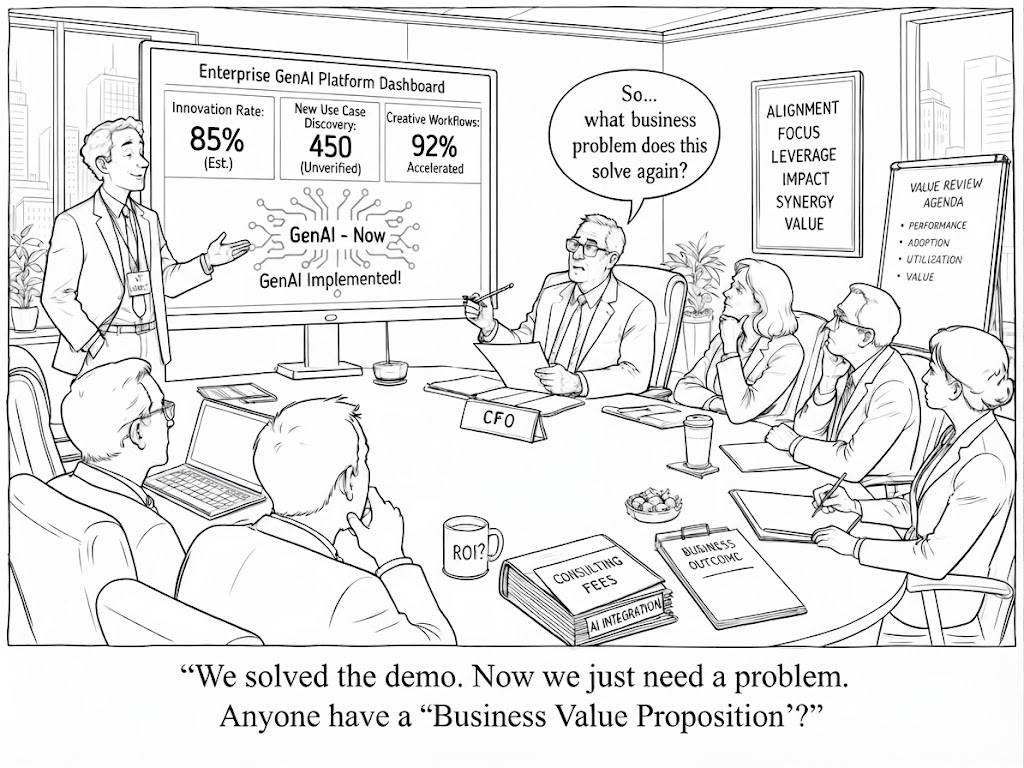
A 29-year-old bright consultant walks in with a 180-day plan: AI automate these workflows, reorganize these roles. The head of internal systems (sitting on that presentation) hearing that isn’t thinking about the roadmap. He’s thinking: I still have to pay the mortgage in six months time.
Call it augmentation, human-in-the-loop, operating-model redesign — the lady consultant title doesn’t matter. If your income depends on that role on that slide, uncertainty about the role is uncertainty about your life.
That’s the part transformation plans keep safe under the carpet.
People see AI blamed for layoffs, and some of them know headcount reduction is exactly the point for some execs. The irony: the workforce being redesigned is not just the risk to manage. It holds the information the transformation needs to succeed.
(we all know who) research backs this up. 46% of employees would consider leaving over a poorly implemented AI rollout. 69% say they were never properly consulted on how AI would touch their own work.
So the plan marches in, and in the same motion frightens the people who hold the operational knowledge into withholding it, resisting, telling you what you want to hear, or quitting.
That’s not just bad change management. That’s destroying organization landscape underlying mechanisms, before the project even starts.
Business with vision will win the AI ROI race. And there will be collateral damage.