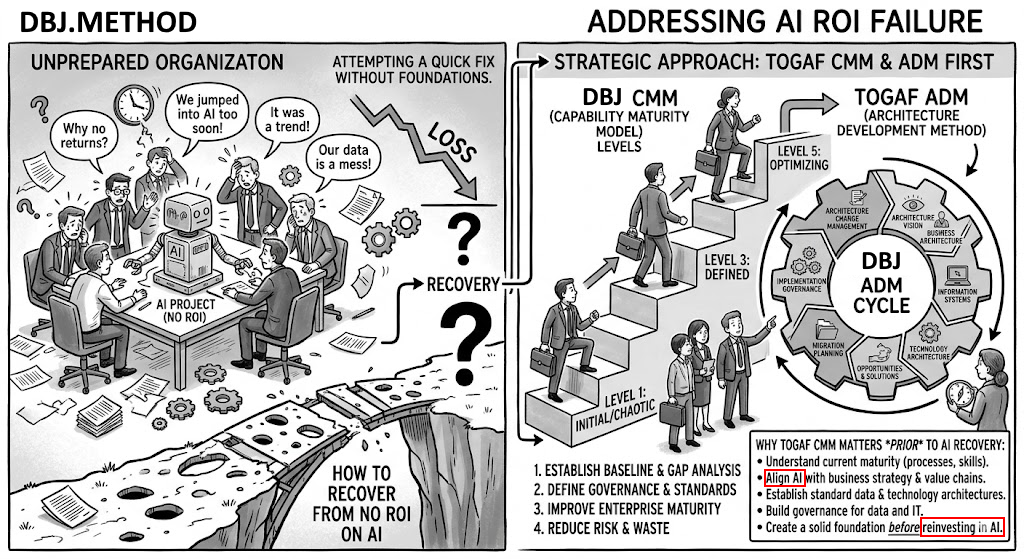
The Modern Ship of Fools

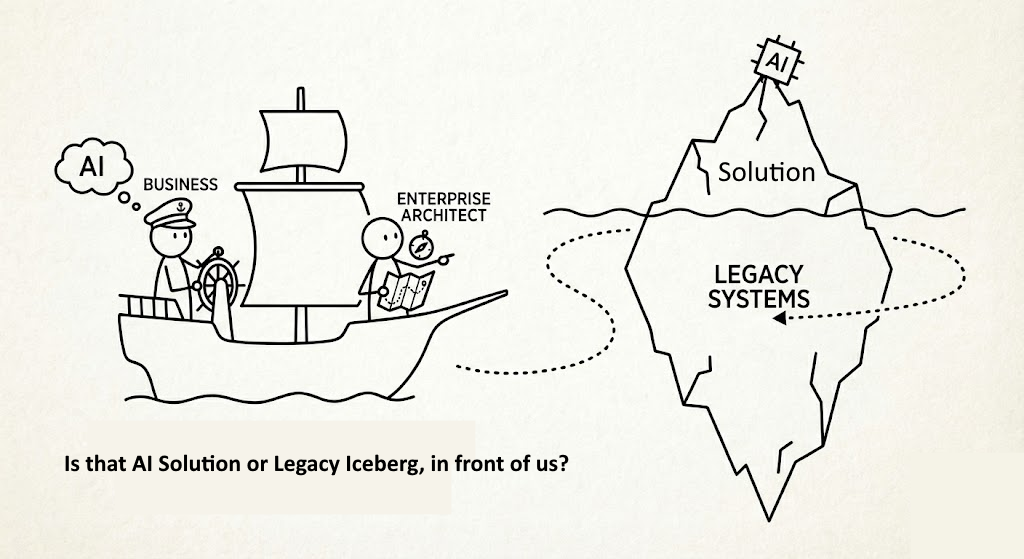
A company running without an operational manual is a modern ship of fools: a full crew, might be fast engine, and no chart. Everyone on board is busy. Decisions get made, fires get put out, quarters get closed. But none of it is guide by any method — so none of it survives contact with a new hire, a departure, or a bad week. The knowledge lived in heads, not in process. The ship sails on momentum, not on navigation. ...

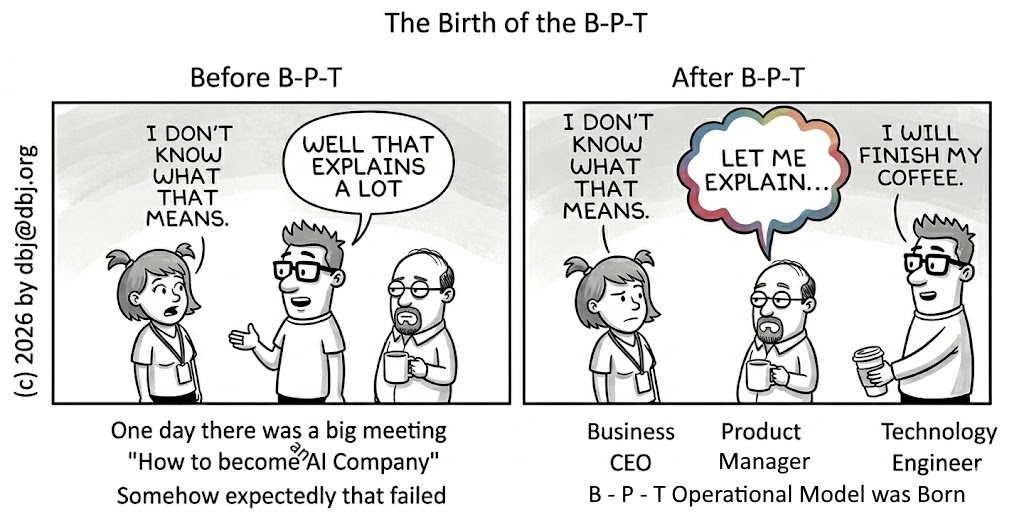
BPT Birth In One Image

That’s not a joke about forever confused CEO. It’s the default state of most AI hopefuls. The Perpetual State of Confusion Every vendor pitch, every all-hands, every roadmap slide is full of words everyone nods at: “agentic,” “AI-native,” “transformation.” Nobody stops the meeting to ask what they actually mean for this business, this process, this P&L line. So the nodding continues. Budgets get approved. (AI) Pilot gets funded. And six months later, nobody can explain why the thing doesn’t work — because nobody could explain, at the start, what “working” was supposed to look like. ...

The Business Ship Manual

The Flight Plan and the Autopilot The elusive goal of the “Competitive Advantage” What will “give” the “competitive advantage” is the Operational model, in order to navigate the whole organization around that huge iceberg of legacy. https://method.dbj.org/shop/ OP model introduction is not simple. But its worth it. Especially if organization is small(ish) and not too calcified. Just decide on one OP model, implement it and follow it. AI or no AI. ...

Four Kinds of Workflows

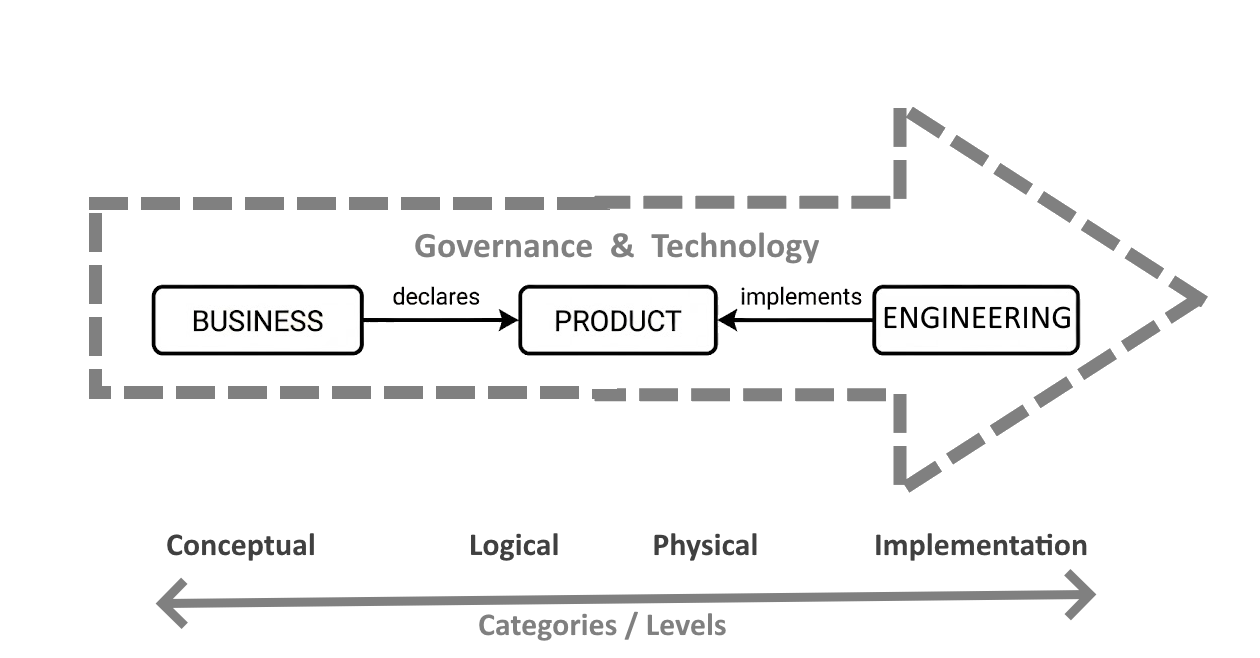
Summary “Workflow” is one word doing four jobs, and the collision is costing organizations clarity about what they actually own. Here’s the untangling. Just as we have different kinds of Architecture, we have different kind of Workflows. Again, DBJ Taxonomy brings order to the confusion. Feasibility replaces the struggle of intertwined responsibilities. And the required precondition of the functioning BPT (aka “the Loop”), of the DBJ Method Operating Model of the AI Readiness. ...

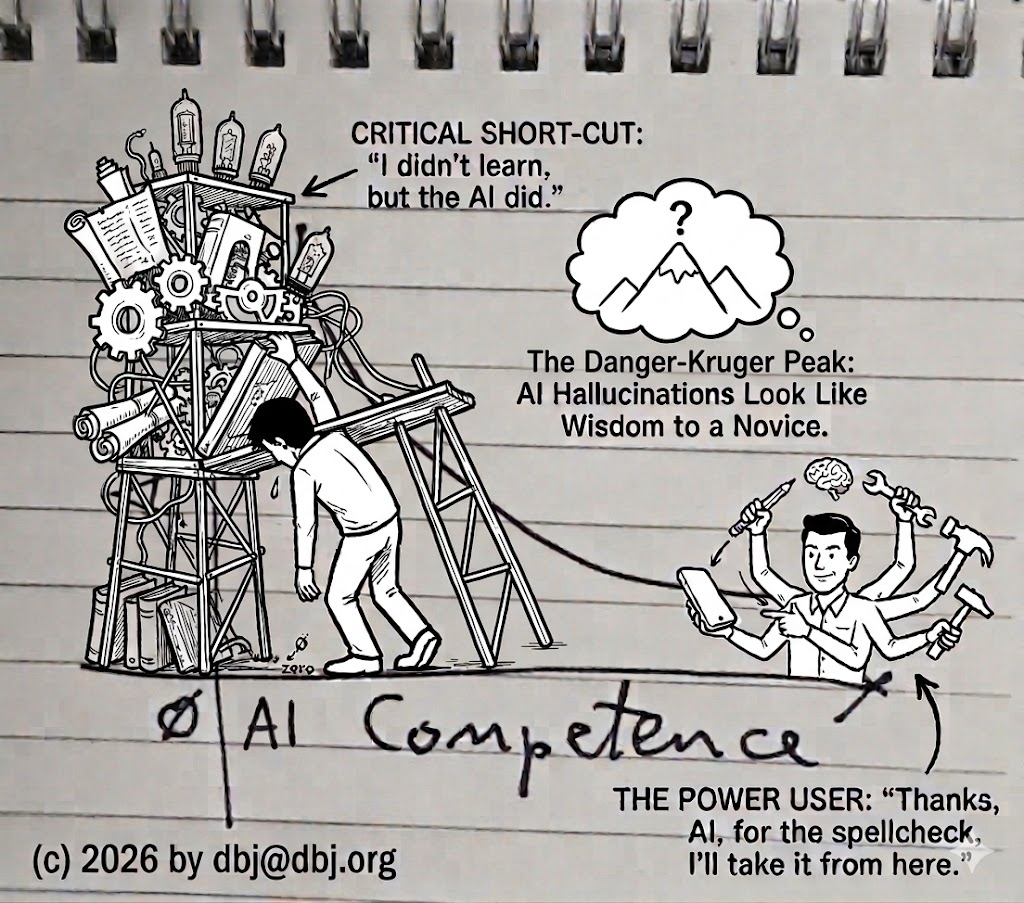
The Danger-Kruger Peak

There’s a ladder. The rungs are labeled “AI Competence.” A novice climbs it, rung by rung, using a critical shortcut: “I didn’t learn, but the AI did.” It works. For a while it works great. The climb is fast, the view improves with every step, and the effort-to-altitude ratio feels like magic. Then the ladder ends. Not because the climber ran out of energy — because the ladder did. That point is the Danger-Kruger Peak: the spot where AI hallucinations start looking exactly like wisdom, because the climber has no competence of their own left to tell the difference. ...

AI on an Old Operating Model

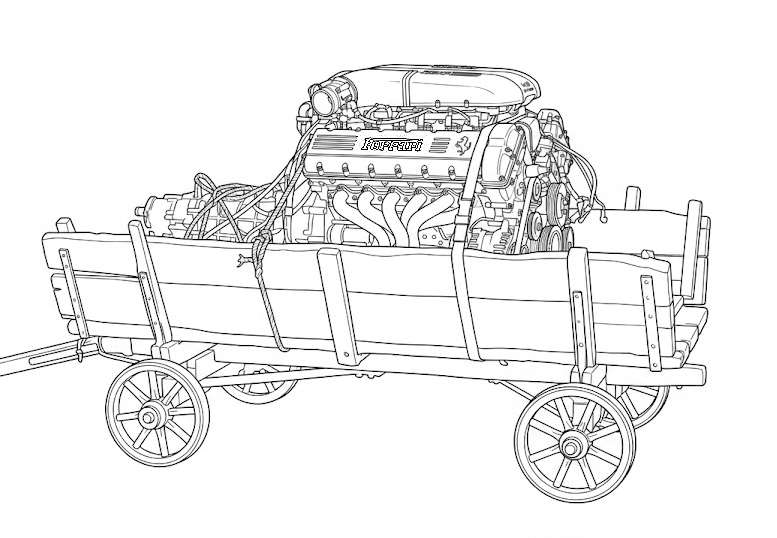
A Ferrari V12 engine dropped into a wooden farm cart. That is not satire. That is the exact situation most organizations are in right now. The engine is state-of-the-art. The cart is nineteenth century. The wheels are wooden. There is no drivetrain, no chassis rated for the load, and nowhere to sit. The moment you open the throttle, the cart disintegrates. What “AI Ready” Actually Means AI-readiness is not a technology procurement question. It is not about which model you license, which cloud you use, or how many GPU hours you can afford. Those are secondary. ...

Post-Hype Agents

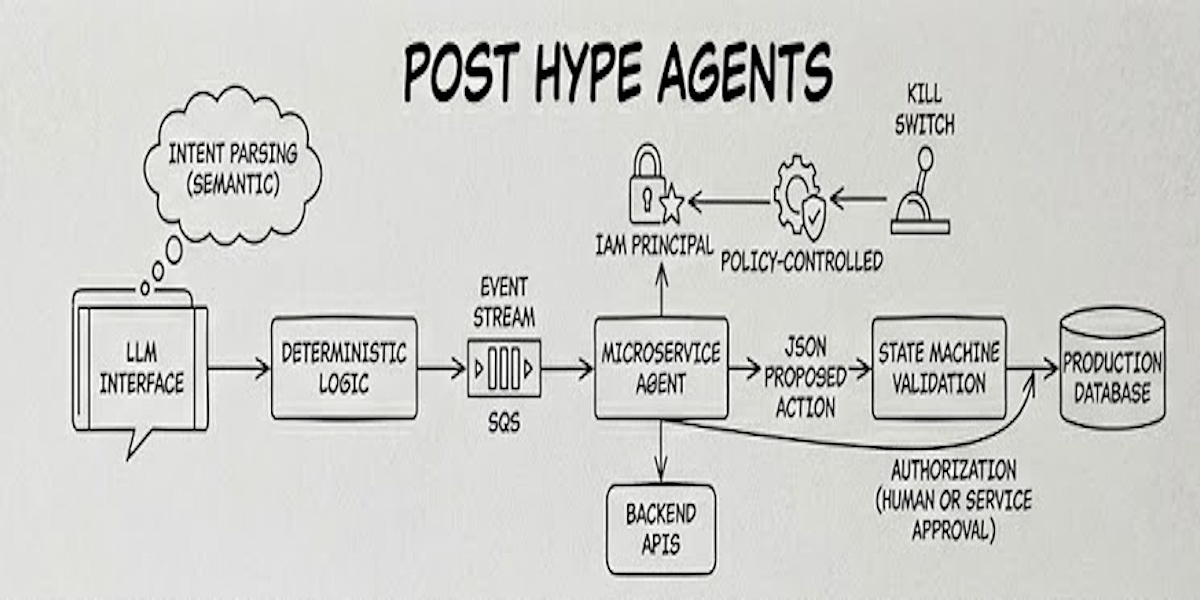
Post Hype Agents This document defines a pragmatic, engineering-first approach to “Agentic” architectures, aligning them with the rigorous standards of the DBJ Method as established at DBJ.ORG. To move beyond current industry hysteria, we define the “Agent” not as an autonomous entity, but as a Policy-Controlled, Deterministic-Adjacent Task Handler. 1. Core Architectural Principles The Agent is a Consumer: Agents are treated as standard microservices. They pull from event streams (e.g., SQS) and execute strictly defined calls to backend APIs. Semantic Adaptation: The LLM is strictly used as a semantic bridge—translating unstructured input (text, legacy formats) into structured data—not as a substitute for business logic. Determinism First: All logic remains in compiled, testable code. The LLM handles the “intent parsing,” while the DBJ Method dictates the “transactional execution.” 2. Governance and Safety (The “Kill Switch” Model) Following the principles of identity-centric security, an Agent is a first-class identity entity: ...