
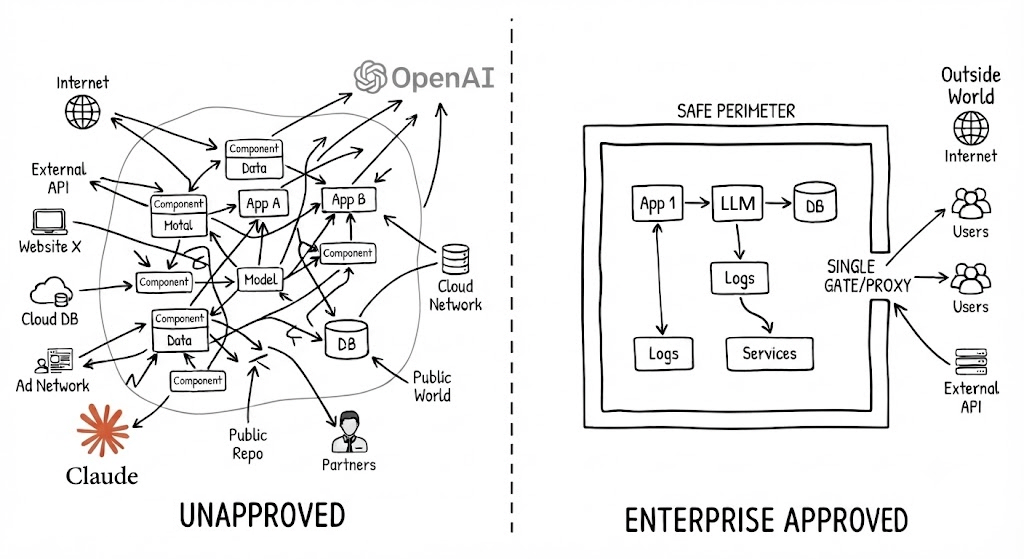
LLM Enterprise Concept All is revolving around security No organization internal system can “reach out” across the safe boundary LLM has to be organization owned and completely hosted inside its safe perimeters Safe Perimeter has only one gate Single point of entry and exit Organization owned LLM Same attributes as any other infrastructural part on the “inside” (RDBMS, AD, ESB) Same features and capabilities as the “front tier” LLMs Also trained on the Enterprise Private Data Aleph Alpha: The Right Model Aleph Alpha, founded in Heidelberg in 2019, built Luminous — a full LLMOwn architecture, training, and own inference. Same category as OpenAI and Anthropic: model creators. ...
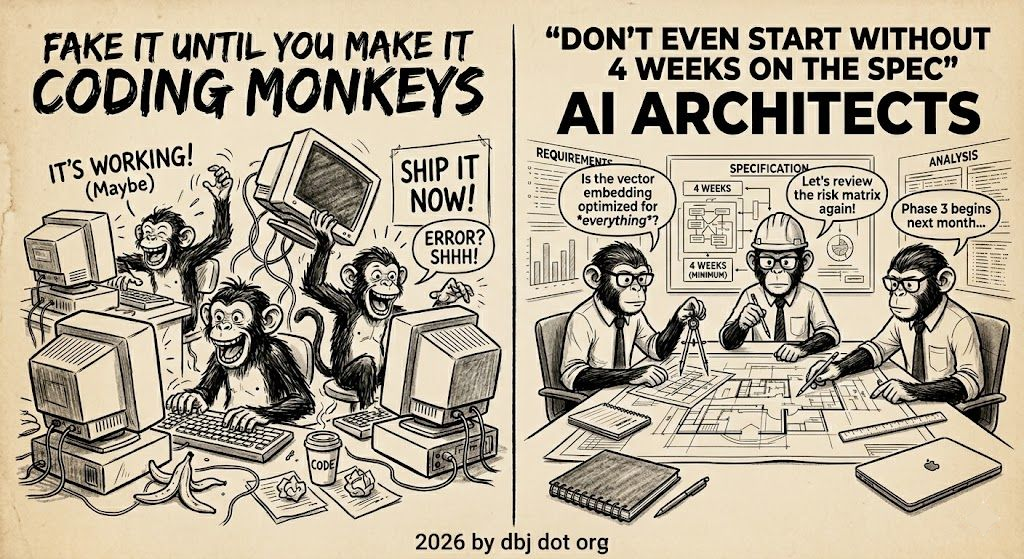
Two teams. Same deadline. Different disasters. On the left: the coding monkeys. Keyboards rattling, errors scrolling, “It’s working! Maybe—” before the SHIP IT NOW and the inevitable ERROR. Fast. Confident. Wrong. On the right: the AI architects. Whiteboards full, meetings scheduled, not a single line written yet. “Don’t even start without four weeks on the spec.” Safe. Thorough. Also wrong. The cartoon is funny because both rooms exist in every organization that has ever touched software. ...
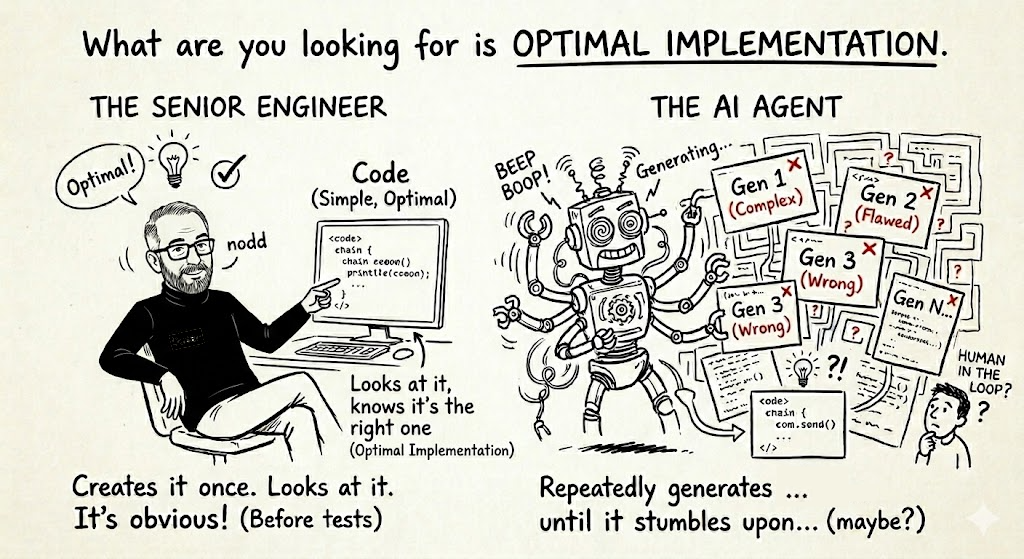
The senior engineer looks at the problem. Builds a mental model. Writes code that is simple and correct. Looks at it again, knows it’s right, moves on. The AI agent generates. Evaluates. Regenerates. Evaluates again. Tries a variation. Stumbles into something that passes the tests. Maybe. Same output, different paths. And the path matters — not for sentimental reasons, but for practical ones. What optimal actually means Optimal implementation is not the cleverest solution. It’s not the most elegant one. It’s the one that is correctly scoped to the problem, legible to the next person who touches it, and arrived at deliberately rather than by exhaustion of alternatives. ...
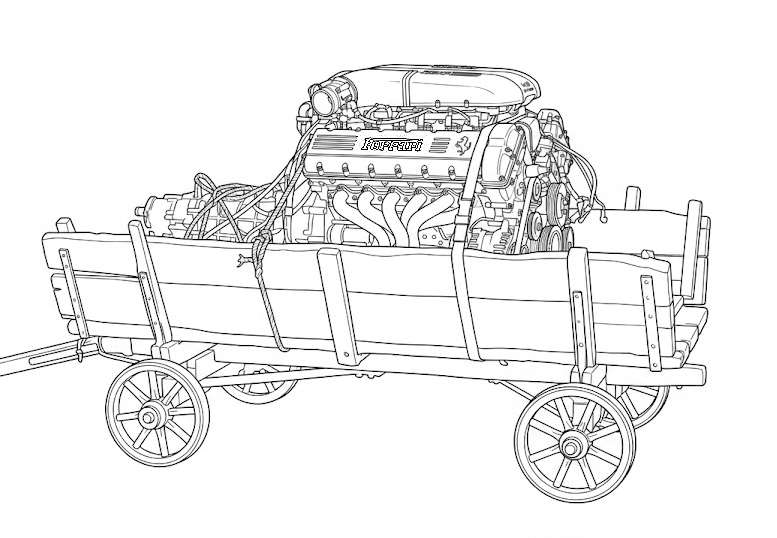
A Ferrari V12 engine dropped into a wooden farm cart. That is not satire. That is the exact situation most organizations are in right now. The engine is state-of-the-art. The cart is nineteenth century. The wheels are wooden. There is no drivetrain, no chassis rated for the load, and nowhere to sit. The moment you open the throttle, the cart disintegrates. What “AI Ready” Actually Means AI-readiness is not a technology procurement question. It is not about which model you license, which cloud you use, or how many GPU hours you can afford. Those are secondary. ...
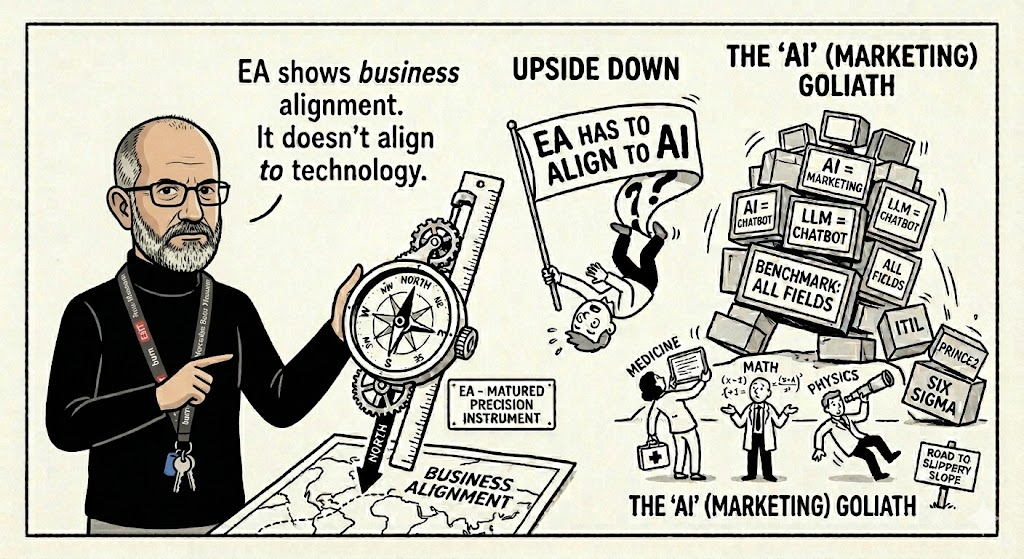
Regarding the phrase “EA has to align with AI” — a revolutionary flag being waved high. This time by Gartner: https://lnkd.in/d9F9_QZZ This is completely upside down. EA will not change because of AI; to suggest otherwise misses the point of EA entirely. For 50 years, EA has matured into a vital tool. EA is a precision instrument that tells you, me, and all of us whether a business is truly aligned with its technology. ...
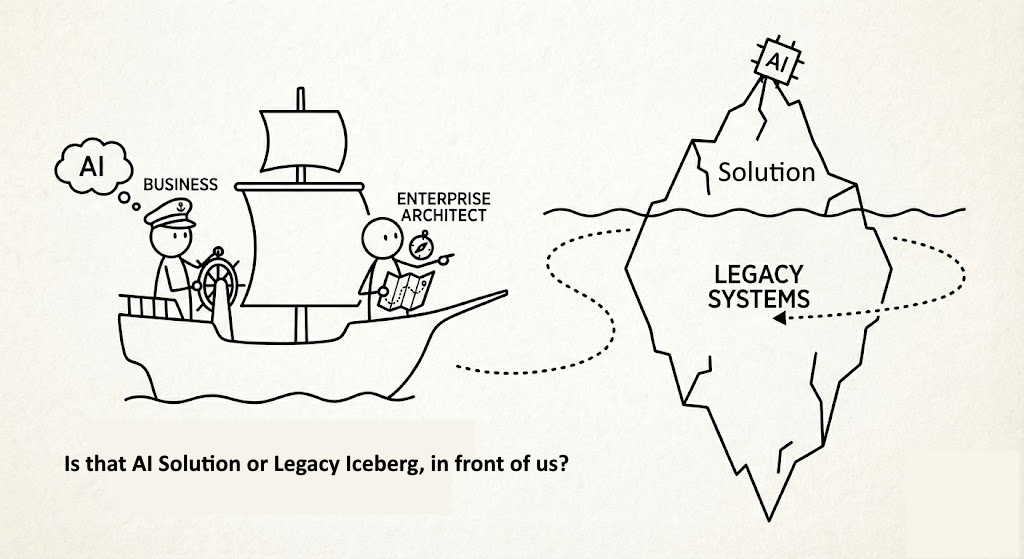
Clear roles == Clear communication == Safe Business Sailing Otherwise. “if the underlying system does not evolve…” : AI mirrors broken structures: in a big ball of mud with messy models and fuzzy boundaries, it propagates inconsistencies and hallucinates domain meaning AI amplifies organizational frictions: with repeated handoffs between teams, AI-accelerated code generation creates bigger queues at the handoff. It does not increase throughput, but inventory. AI builds the wrong things faster: without strategic guidance, it custom-builds commodities for non-differentiating problems that already have off-the-shelf alternatives. For details: Building Foundations for Continuous (AI-accelerated) Change ...
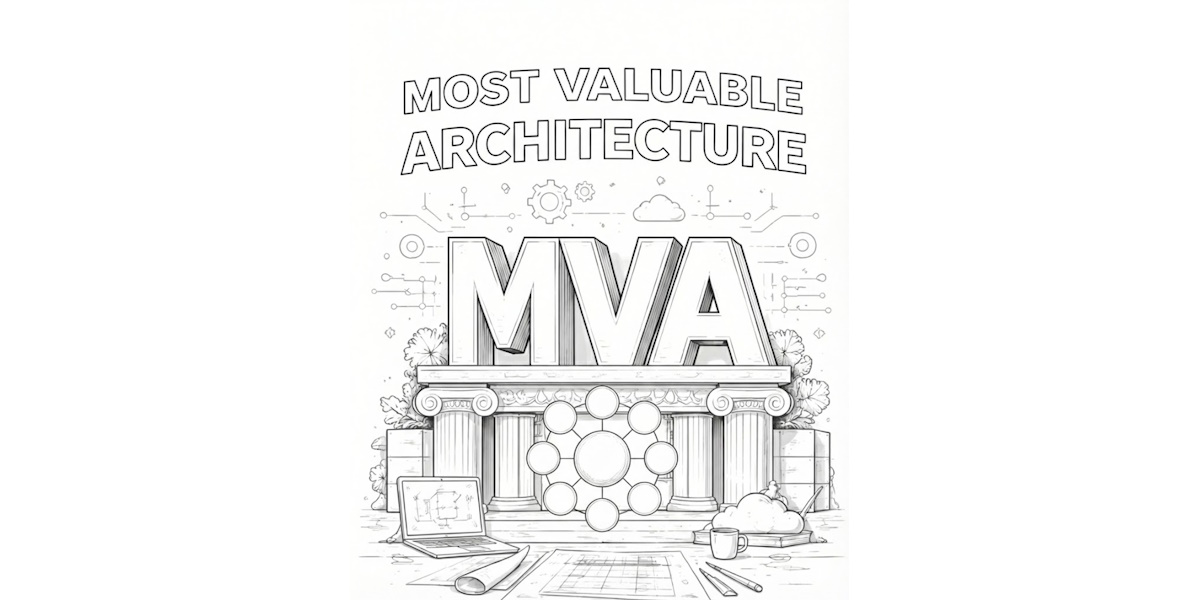
CMM --> MVA --> AI --> ROI AI won’t fix a broken foundation. Stop pouring budget into AI experiments that stall in the pilot phase. Technical debt is the silent killer of ROI. It’s time to move past the “Minimum Viable” mindset and build your Most Valuable Architecture (MVA). Clean the slate, structure your data, and finally see the returns you were promised. Turn Technical Debt into AI Equity. High complexity shouldn’t be the ceiling for your innovation. The MVA framework provides the structural integrity needed to bypass legacy bottlenecks. By applying a systematic, architectural approach to AI integration, we help you eliminate wasted spend and accelerate time-to-value. ...
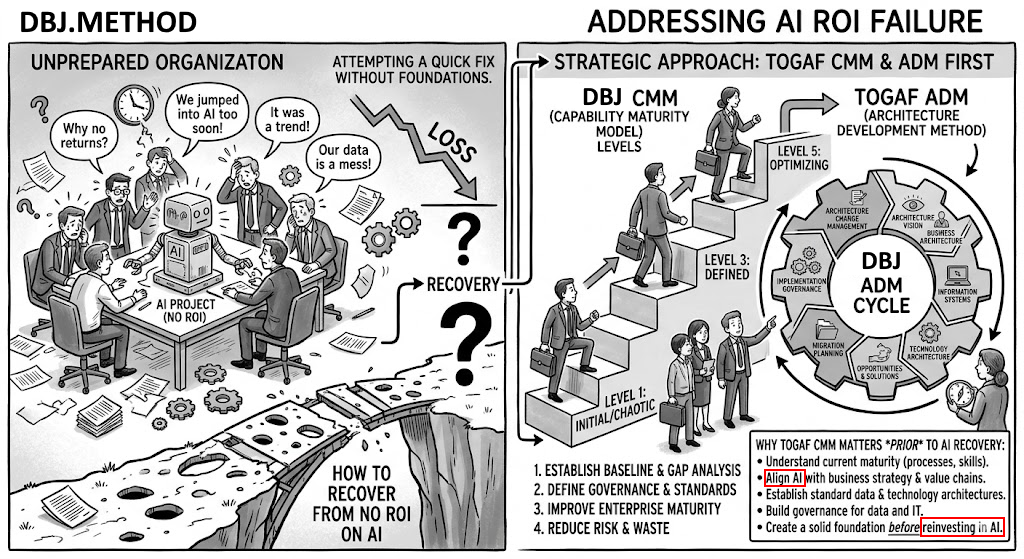
Question: Why does DBJ begin with Capability Maturity Model assessment rather than jumping straight into technical delivery? Answer: Because transformation fails without measurable organizational readiness. The Foundation Problem Most enterprises attempt AI-assisted modernization while operating at ad-hoc levels. This creates: Misaligned expectations between business and technology Inconsistent terminology across stakeholder groups Undefined accountability for architectural decisions No repeatable process for evaluating technical risk Architecture-led, AI-assisted delivery requires stable foundations. CMM onboarding establishes those foundations before any work begins. ...

I dared to insert the term “Technical Debt” in standard text bellow Socrates then supposes that the prisoners are released. A freed prisoner would look around and see the fire. The light would hurt his eyes and make it difficult for him to see the objects casting the shadows. If he were told that what he is seeing is real instead of the other version of reality he sees on the wall of Technical Debt, he would not believe it. In his pain, Socrates continues, the freed prisoner would turn away and run back to what he is accustomed to (that is, the shadows of the carried objects of Technical Debt). The light “… would hurt his eyes, and he would escape by turning away to the things which he was able to look at, and these he would believe to be clearer than what was being shown to him.” ...