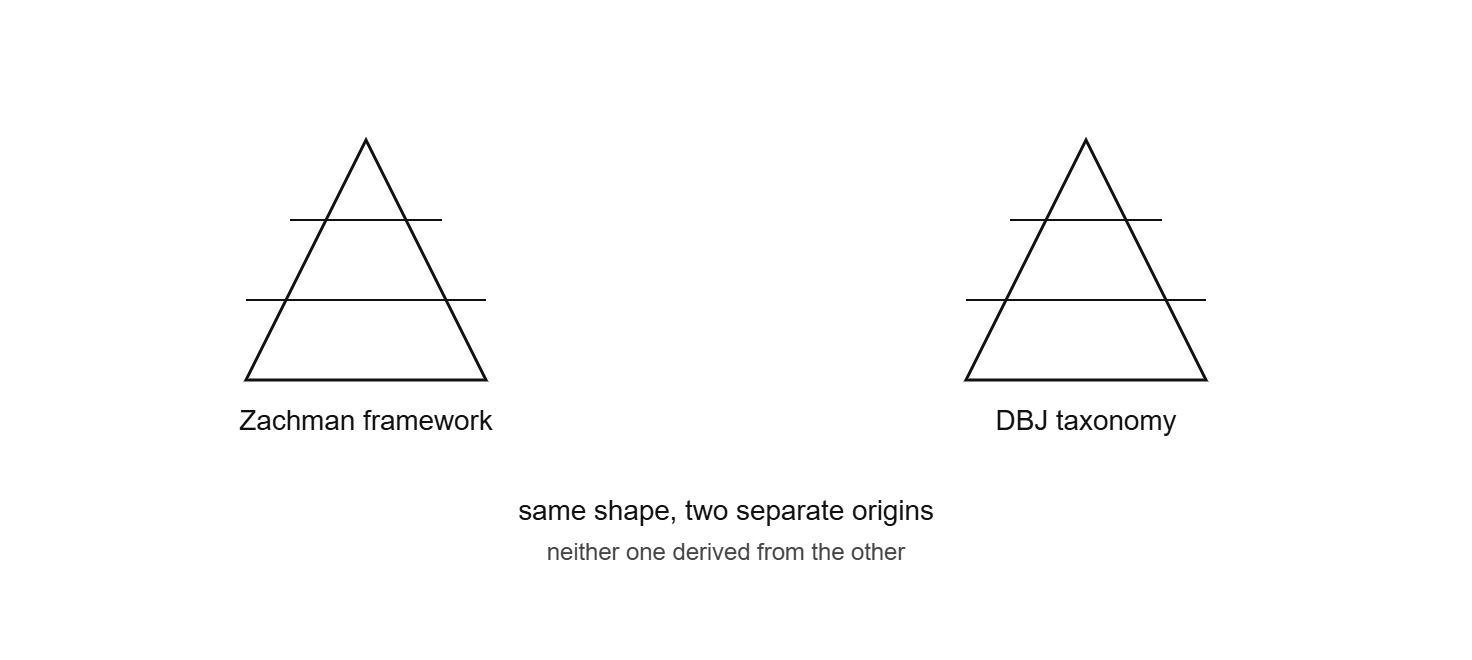
Important: Resemblance Is Not Lineage

Someone described DBJ Taxonomy this way: “a taxonomy that maps to Zachman-style layers (Strategic/Conceptual → Logical → Physical → Implementations).” Sounds credible. Sadly, it isn’t true. That image is the simplified four-layer version quoted in the claim. It’s not what Zachman actually defined — his framework is a 5×6 matrix (Scope/Business/System/Technology/Component crossed with What/How/Where/Who/When/Why), not a single top-to-bottom stack. The linear “Strategic → Logical → Physical → Implementations” progression is a loose paraphrase, which is also why the mapping claim doesn’t hold up. ...
DBJ Method One-Pager

This was my opinion when asked to produce DBJ Method “one pager”, eof June 2025 1. Two Steps When we actually look at what is in the DBJ Method “shop window”, the inventory is arranged in two categories organizational structures and strict mandates. These are the two parts: The BPT and the CMM . DBJ Method users are not “buying” a framework; they are buying a blueprint for a two-tiered company topology: ...

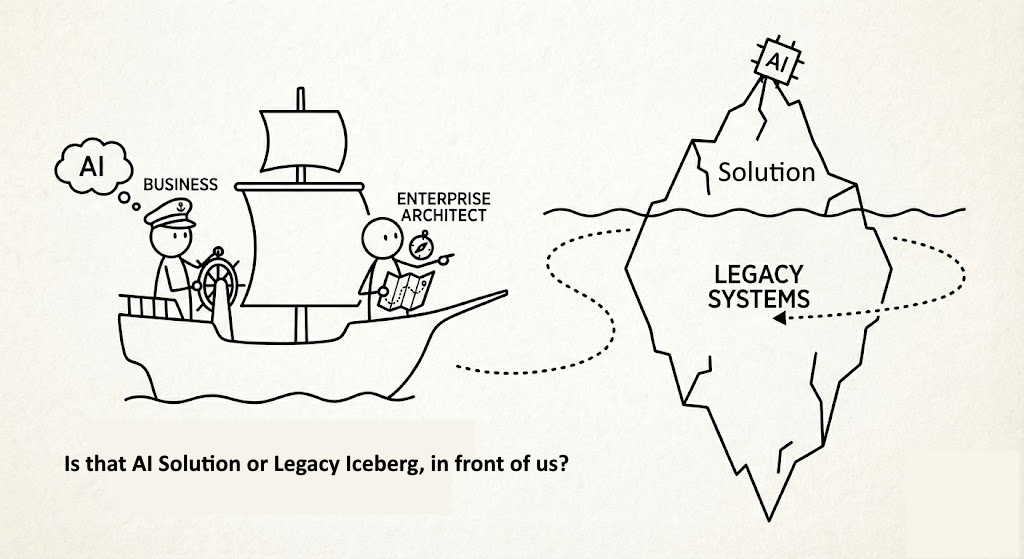
AI or Iceberg: EA as Navigator

Clear roles == Clear communication == Safe Business Sailing Otherwise. “if the underlying system does not evolve…” : AI mirrors broken structures: in a big ball of mud with messy models and fuzzy boundaries, it propagates inconsistencies and hallucinates domain meaning AI amplifies organizational frictions: with repeated handoffs between teams, AI-accelerated code generation creates bigger queues at the handoff. It does not increase throughput, but inventory. AI builds the wrong things faster: without strategic guidance, it custom-builds commodities for non-differentiating problems that already have off-the-shelf alternatives. For details: Building Foundations for Continuous (AI-accelerated) Change ...

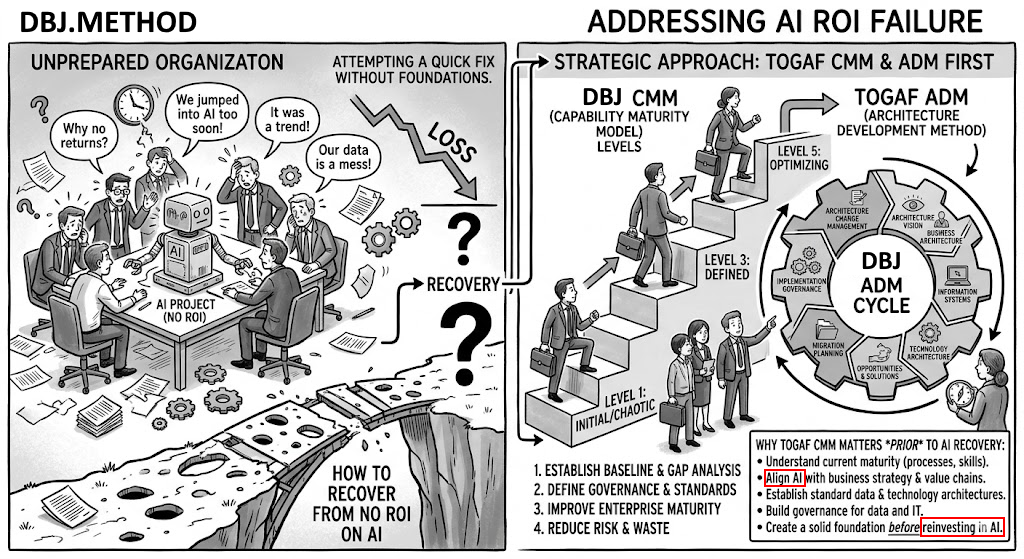
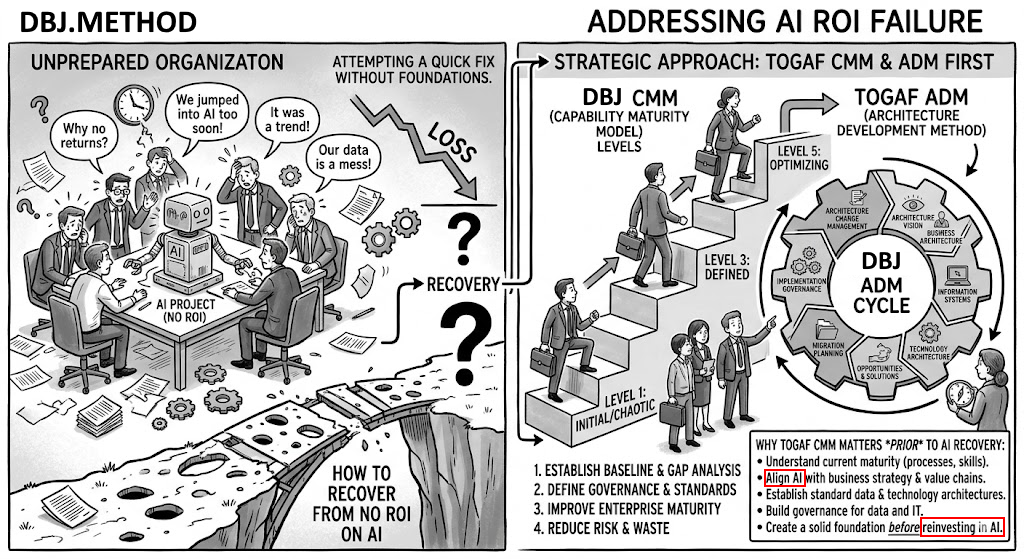
Why CMM Onboarding Is DBJ.METHOD's First Step

Question: Why does DBJ begin with Capability Maturity Model assessment rather than jumping straight into technical delivery? Answer: Because transformation fails without measurable organizational readiness. The Foundation Problem Most enterprises attempt AI-assisted modernization while operating at ad-hoc levels. This creates: Misaligned expectations between business and technology Inconsistent terminology across stakeholder groups Undefined accountability for architectural decisions No repeatable process for evaluating technical risk Architecture-led, AI-assisted delivery requires stable foundations. CMM onboarding establishes those foundations before any work begins. ...